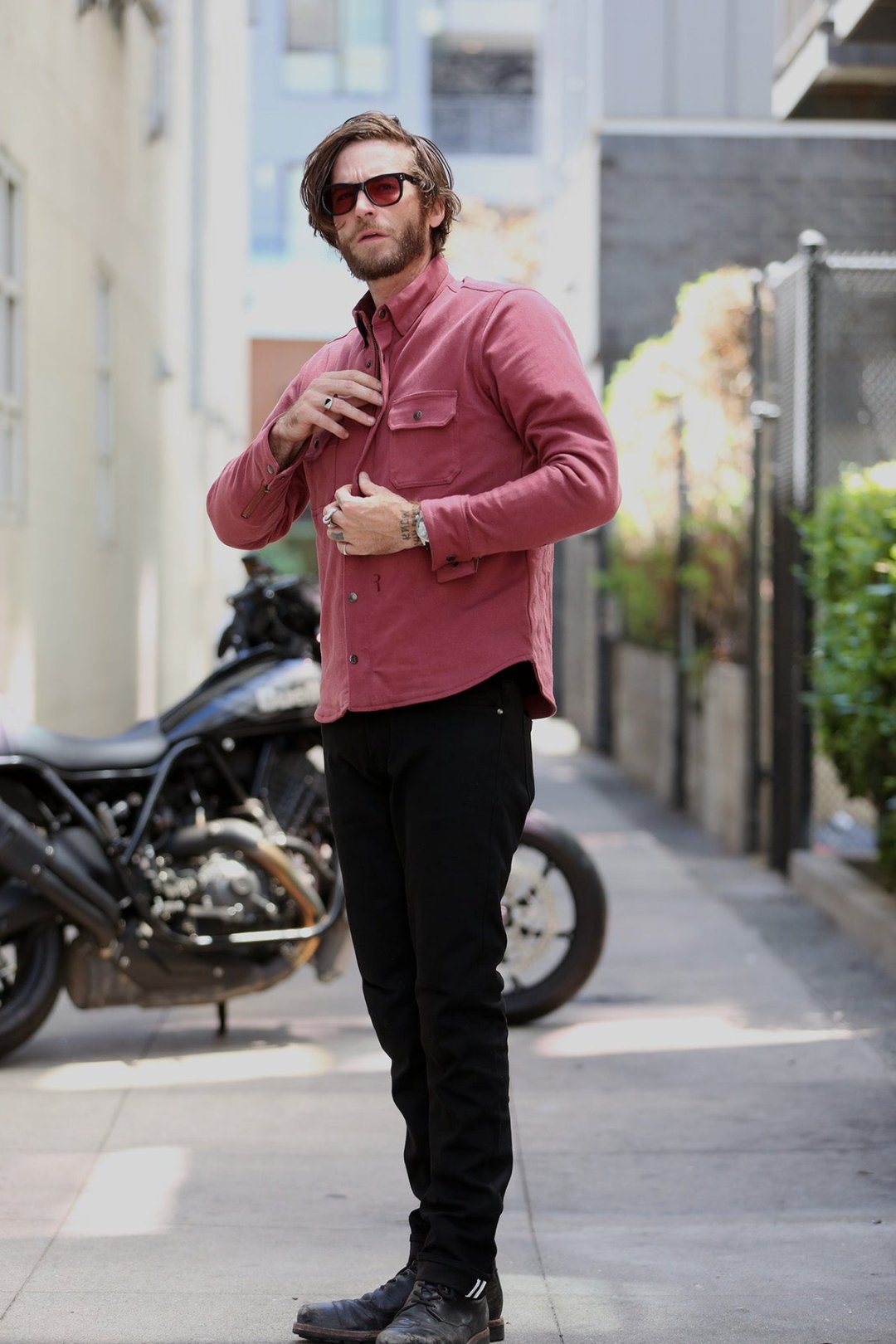


Are Armored Motorcycle Hoodies Safe?
Last Updated: November 7, 2026
Quick Summary
Armored motorcycle hoodies are safe when the garment carries a real CE rating to EN 17092 and the armor stays put in a crash. A CE class tells you how the garment performed in testing, not where the protective material sits, so check the sewn-in label rather than the marketing.
- CE-certified armor means the protector passed a standalone impact test to EN 1621-1 or EN 1621-2.
- A garment tested as protective clothing is evaluated as a whole to EN 17092 and given class A, AA or AAA.
- A loose hoodie lets shoulder and elbow pads slide out of place, and a pad that moves protects nothing.
- Remove the protectors before every wash, use a gentle cycle at 30°C and skip the tumble dryer.
- Check seams, fabric thinning, armor condition, pocket retention and zippers once a year and after any crash.
Table of Contents
- What the Motorcycle Hoodie Safety Rating Actually Tells You
- Motorcycle Hoodie vs Jacket Protection: Where the Difference Shows Up
- Getting Motorcycle Hoodie Armor Fit Right
- Motorcycle Hoodie Care Instructions That Keep Protection Intact
- Frequently Asked Questions
What the Motorcycle Hoodie Safety Rating Actually Tells You
Armored motorcycle hoodies are safe when the garment itself carries a real CE rating and the armor stays put in a crash, which is why we treat armored motorcycle hoodies as protective gear first. At Resurgence Gear, we build hoodies to EN 17092, the same standard that governs riding jackets.
A CE class tells you how a garment performed in testing, not where the protective material sits. A hoodie can pass by reinforcing only the zones the test checks, then use ordinary fabric everywhere else.
Two certifications get confused. CE-certified armor means the shoulder, elbow, or back protector passed a standalone impact test, usually EN 1621-1 for limb armor or EN 1621-2 for back protectors. A garment tested as protective motorcycle clothing means the whole hoodie, fabric, seams, and armor together, was evaluated to EN 17092 and assigned a class (A, AA, or AAA). A hoodie can have certified armor without being a certified garment.
Read the label, not the marketing. Look for a sewn-in CE mark with the motorcycle pictogram, the standard number (EN 17092), and the class, plus the armor standard and level. No label means no certification, whatever the tag says.
Some brands advertise "CE armor included" and let shoppers assume the hoodie is certified. Those are separate claims. Ask for the garment label photo before you buy.
For a closer look, see our guide on motorcycle hoodies and how safe they really are and our breakdown of CE AA vs AAA and what EN 17092 means.
Here is how the two certifications differ and what to look for on the label.
Term |
What it means |
Standard |
|---|---|---|
CE-certified armor |
Shoulder, elbow or back protector passed a standalone impact test |
EN 1621-1 or EN 1621-2 |
Garment tested as protective clothing |
Whole hoodie evaluated and assigned a class |
EN 17092 (A, AA, AAA) |
Label to look for |
Sewn-in CE mark with motorcycle pictogram, standard number and class |
EN 17092 |
No label |
No certification, whatever the tag says |
None |
Motorcycle Hoodie vs Jacket Protection: Where the Difference Shows Up
A good hoodie and a good jacket can both be safe. The gap shows up in coverage, not in the class alone. Most hoodies are short at the back and light on abrasion fabric, leaving more skin exposed in a slide.
A jacket usually wins on three counts:
- Longer cut and fuller coverage over the back and hips
- Thicker or double-layer fabric in high-wear zones
- More room for a proper back protector
Hoodies win on comfort and everyday wear, and gear you actually put on protects you more than gear left in the closet.
Our Richmond hooded motorcycle jacket sits between the two. It is single-layer PEKEV® Ultra Lite, CE AAA certified, with D3O® Ghost shoulder, elbow and back protectors included.

Pros of a hoodie: light, breathable, easy to wear off the bike, less bulk. Cons of a hoodie: shorter coverage, less abrasion fabric, looser fit that can shift armor.
Getting Motorcycle Hoodie Armor Fit Right
Armor only works if it stays over the joint it protects. A loose hoodie lets shoulder and elbow pads slide out of place, and a pad that moves protects nothing. Armor with room to move may not do much in a crash.
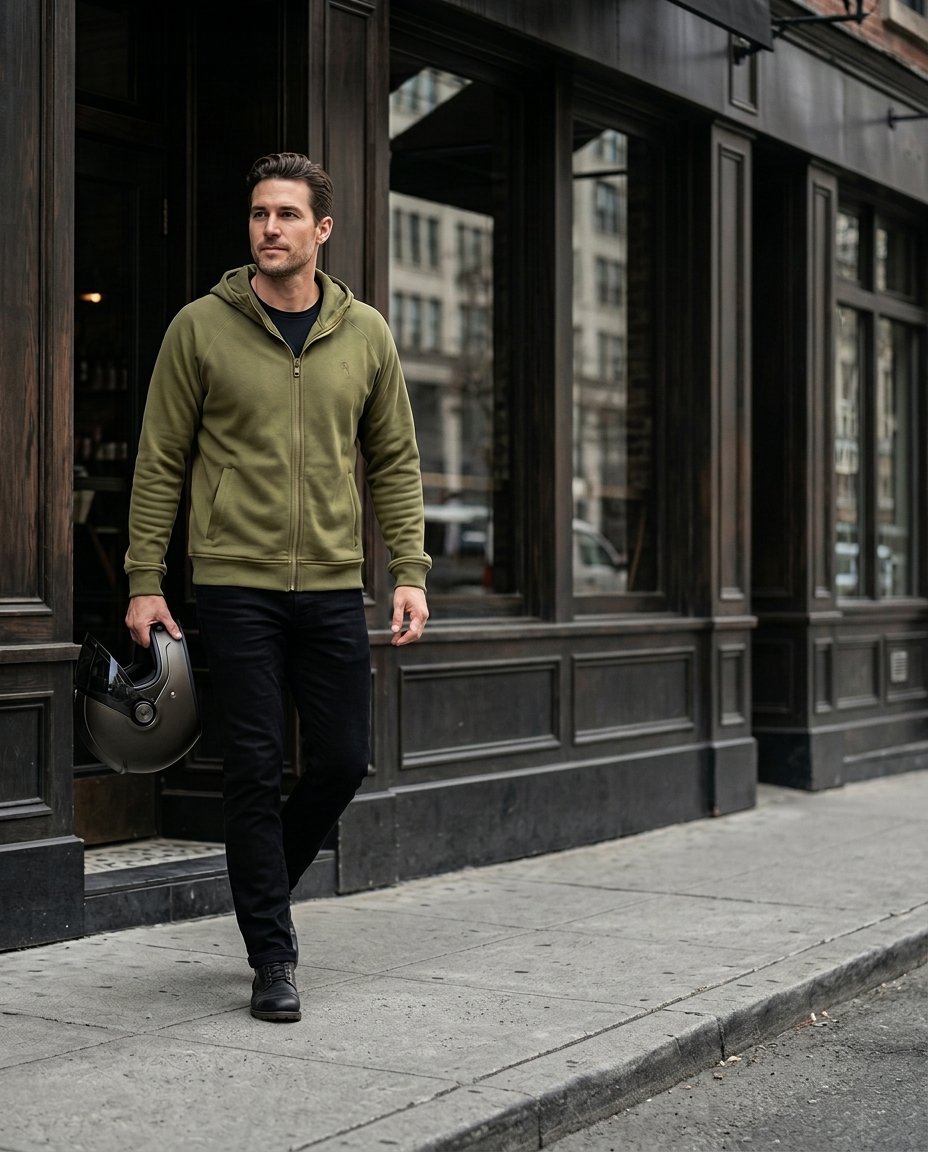
Run this check before you buy or ride:
- Bend your arms and reach forward. Do the elbow pads stay put?
- Roll your shoulders. Do the shoulder pads stay centered?
- Twist your torso. Does the back protector stay flat against your spine?
- Sit on the bike. Does the hem ride up and expose your lower back?
- Shrug the hoodie on and off. Does it feel snug, not baggy?
A snug fit is the goal. Baggy clothing lets armor drift and can snag or flap at speed. Our size guide lists chest, waist and inseam measurements. For pad ratings, read our guide to motorcycle armor, Level 1 vs Level 2 and back protectors.
Motorcycle Hoodie Care Instructions That Keep Protection Intact
Washing does not have to kill your protection, but heat and harsh cycles can. A garment is tested new. Sun, washing and years of use can wear through a liner or degrade the fabric if you ignore the care label.
Follow these steps:
- Remove the protectors before every wash.
- Use a gentle cycle at 30°C or hand wash in cold water.
- Skip the tumble dryer. Lay flat or hang to dry.
- Never dry clean, bleach or use fabric softener.
- Check the armor and seams each season for wear.
PEKEV® protection is permanent and does not wash out. That is one reason we build with it. Treat the shell well and the protection stays with you for years.
Inspection matters just as much as care. Once a year, and after any crash or drop, check for the things that quietly reduce protection:
- Seams: Look for pulled threads, open stitching, or fraying at the shoulders, elbows, and side panels. A failed seam can separate the abrasion layer from the liner in a slide.
- Fabric thinning: Hold the hoodie up to a light. Thin or shiny patches in high-wear zones mean abrasion resistance has worn down.
- Armor condition: Remove each pad and flex it. Cracked, hardened, or deformed armor should be replaced;
- Pocket retention: Check that armor pockets still hold pads snugly. Stretched pockets let armor drift.
- Zippers and closures: A broken main zipper can let the hoodie open in a slide, exposing skin.
Both matter. If a seam is failing or the fabric is thinning, the hoodie is no longer the garment that was tested.
A hoodie is only as safe as its label, its fit and the armor inside it. If you want all three handled for you, Resurgence Gear builds CE-certified hoodies and jackets with PEKEV® fibre and protectors included, shipped free across Canada. Browse the range and ride in gear that protects without looking like armor.
Frequently Asked Questions
Are armored motorcycle hoodies safe for highway riding?
It depends on the certification, not the garment type. A hoodie certified to EN 17092 at Class AA or AAA has been tested for abrasion and seam strength at the level the standard sets for that class, and that class applies to higher-speed riding. A hoodie with armor pockets but no CE label has no verified abrasion rating, so highway use is a gamble. Check the sewn-in label for the motorcycle pictogram, EN 17092 and the class before you decide.
How should motorcycle hoodie armor fit, and what happens if it moves?
Armor only works if it stays over the joint it protects. Armor with room to shift may not do much in a crash. Try the hoodie on, bend your elbows and shoulders, and confirm the shoulder and elbow protectors stay put rather than sliding to the side.
How do you care for a motorcycle hoodie without damaging its protection?
Remove the protectors first, then follow the care label. Resurgence Gear's Wellington sweater takes a gentle machine cycle at 30°C, no tumble drying, no dry cleaning and no bleach, and its PEKEV® protection is permanent and does not wash out. Inspect the protectors for cracks or flattening after repeated washes. Washing a certified hoodie incorrectly can wear through linings or shrink the shell until the armor no longer sits where it should.