
Daily Commuting Motorcycle Jeans: What Actually Matters
Last Updated: November 14, 2026
Quick Summary
The best motorcycle jeans for daily commuting combine real abrasion protection, armor that stays where it should, and a cut you can wear from the bike to your desk without a change of clothes. Look for a sewn-in CE label, included Level 2 knee and hip protectors, and a tapered stretch fit that reads as normal denim off the bike.
- AA and AAA are protection classes under EN 17092, with AAA the higher abrasion class.
- No CE label means the garment isn't certified, whatever the marketing claims.
- Remove the protectors before every wash and hang jeans to dry, never tumble dry.
- PEKEV protection is permanent and does not wash out.
- The Warrior AA jean is CE AA certified with Level 2 knee and hip protectors included.
Table of Contents
- Why Most Motorcycle Jeans Fail the Commute Test
- AA vs AAA Motorcycle Jeans: Reading the CE Label Correctly
- Motorcycle Jeans With Knee and Hip Protection: Where the Armor Actually Sits
- Comfortable Motorcycle Jeans for Everyday Wear: Fit, Cut, and Off-Bike Mobility
- Single-Layer vs Lined Construction: What Holds Up on a Real Commute
- How to Wash Motorcycle Jeans Without Losing Protection
- Building a Commuter Wardrobe Around One Pair of Riding Jeans
- Frequently Asked Questions
Why Most Motorcycle Jeans Fail the Commute Test
Many motorcycle jeans are built for the showroom, not the ride to work. They can pass a lab test, yet still fall short on the things that matter daily: how they feel after 30 minutes in a seated position, whether the armor stays put, and if they still look like normal jeans when you walk into the office.
At Resurgence Gear, we build riding jeans for exactly this problem. The best motorcycle jeans for daily commuting combine real abrasion protection, armor that stays where it should, and a cut you can wear from the bike to your desk without a change of clothes.
A CE class on the label tells you the fabric passed a test. It doesn't tell you where the protective material sits or whether the armor is included, and both details matter on a commute.
Below, we break down what separates a commuter jean from a weekend riding jean.
AA vs AAA Motorcycle Jeans: Reading the CE Label Correctly
AA and AAA are protection classes under EN 17092, the standard that governs motorcycle clothing. AAA is the higher abrasion class, and AA sits one step below. The class reflects how much abrasion the garment's material resists in testing, not how much of the garment is covered.
That distinction matters. A jacket or jean can meet a class by reinforcing only the zones the standard requires and using ordinary fabric elsewhere. So the label confirms a minimum, not the whole story.
CE certification is the process of testing a garment against EN 17092 and assigning it a class based on abrasion and impact performance. Look for a sewn-in label with the motorcycle pictogram, the standard number, and the class. No CE label means the garment isn't certified, whatever the marketing claims.
For a full breakdown of what each class means and how the testing works, see our guide to CE AA vs AAA ratings.
Motorcycle Jeans With Knee and Hip Protection: Where the Armor Actually Sits
Armor only helps where it stays. Knee and hip protectors are the two impact zones commuters hit most, and the difference between a good and bad jean often comes down to whether the armor is included and whether it stays in place when you're seated.
We include RE ZRO® Flat Level 2 protectors at the knees and hips as standard.
Fit matters as much as the rating. The knee protectors are height-adjustable. For a deeper look at how armor is rated and how it should fit, read our guide to motorcycle armor levels.
Comfortable Motorcycle Jeans for Everyday Wear: Fit, Cut, and Off-Bike Mobility
Comfort is a safety feature. A jean that binds at the hip or bunches behind the knee distracts you at exactly the wrong moment, and one that looks like tactical gear never makes it past the office door.
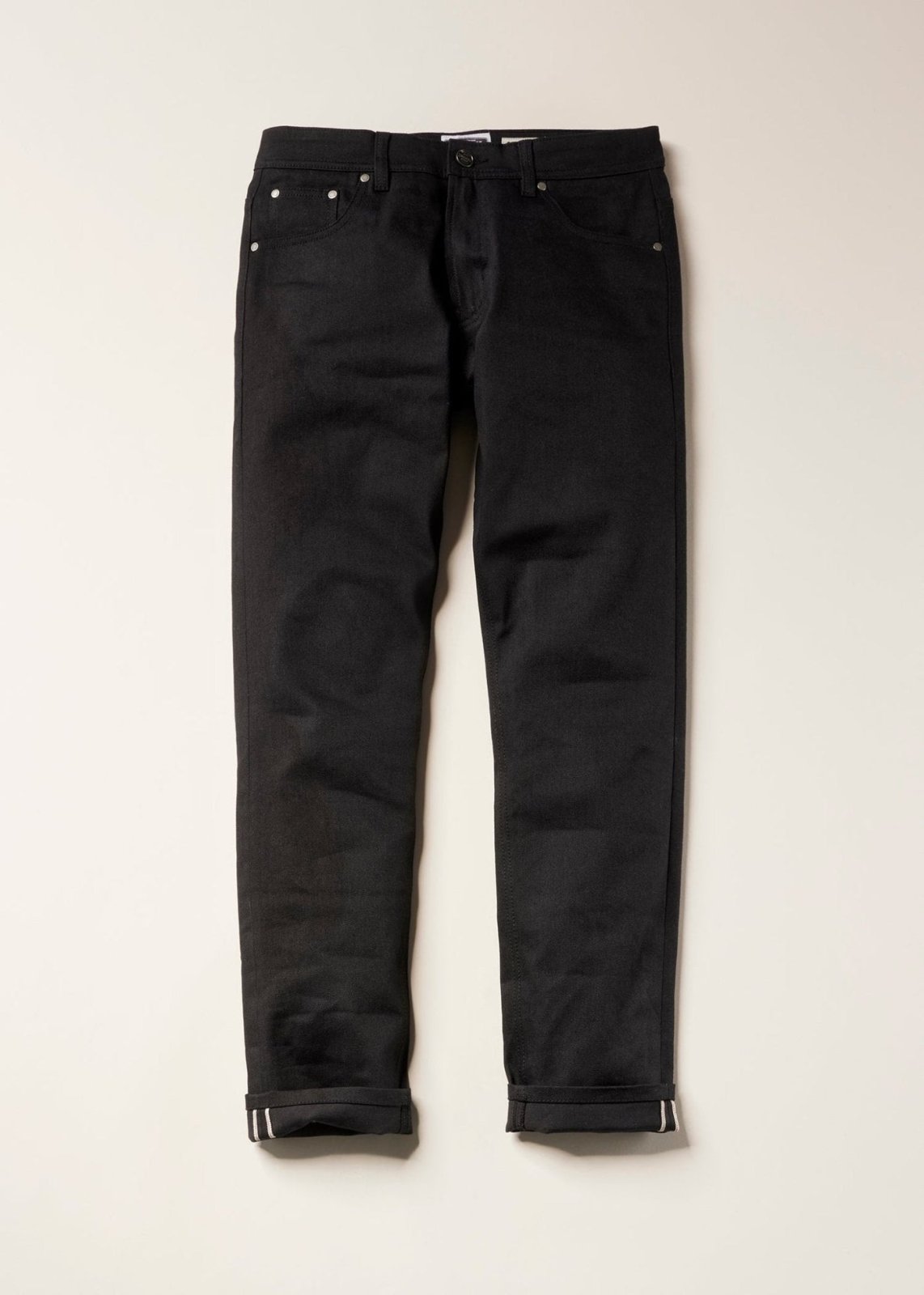
The right cut depends on your build and your ride. A tapered fit with stretch moves with you on the bike and looks clean off it. A regular slim fit suits riders who want a sharper silhouette. Mid-rise waists sit comfortably in a seated riding position, and a bit of stretch through the thigh makes the difference on longer commutes.
If you're between sizes, pick the one where the waist and hip fit best.
Single-Layer vs Lined Construction: What Holds Up on a Real Commute
Single-layer and lined jeans protect in different ways, and the choice affects weight, breathability, drying time, and how the jean feels from the first block of the ride to the last hour at your desk. Most guides stop at "single-layer is cooler, lined is stronger." That's true but incomplete, and it doesn't help you pick for a commute.
**
Lined construction pairs an ordinary outer fabric with a protective lining underneath, often full-length from waist to ankle. The Cafe Racer jean uses 12oz selvedge denim outside and a full PEKEV® lining inside, CE AAA certified.
Here's the commuter-specific comparison most roundups skip:
Factor |
Single-layer |
Full-lined |
|---|---|---|
Weight and bulk |
Lighter, closer to normal denim |
Heavier, more structure |
Breathability in heat |
Better airflow through the shell |
Warmer; lining traps heat |
Cold-weather comfort |
Needs a base layer below about 10°C |
Holds warmth better on cold mornings |
Drying after rain |
Dries faster; one fabric layer |
Lining holds moisture longer |
Off-bike look |
Depends on the outer weave |
Outer denim reads as ordinary jeans |
Seat and knee wear |
Protective yarn is the visible surface |
Outer denim takes the scuffs |
The thing nobody tells you about construction is that "lined" doesn't automatically mean full-length.
For a fuller comparison of lined versus single-layer and how to choose, see our guide to choosing motorcycle jeans.
How to Wash Motorcycle Jeans Without Losing Protection
Washing doesn't have to destroy protection, but the wrong routine can. Follow the care instructions for the garment to keep it in good condition. This is the ownership section most roundups skip: how to care for riding jeans across a Canadian year, and how to know when a pair is past its best.
Follow this routine to keep your jeans working:
- Remove the protectors before every wash
- Machine wash on a gentle cycle in cold water with mild detergent
- Skip bleach and fabric softeners, which break down fibers
- Hang to dry, never tumble dry
- Check the sewn-in CE label and armor pockets after each wash for wear
PEKEV® protection is permanent and does not wash out. That's a meaningful difference from gear that loses its edge after a few cycles. If you want to know how to spot a garment that's past its best, our guide on whether motorcycle gear loses protection walks through a simple inspection.
Care step |
Do this |
Why it matters |
|---|---|---|
Protectors |
Remove before washing |
Keeps armor shape and placement |
Water temperature |
Cold, gentle cycle |
Reduces fiber stress |
Detergent |
Mild, no bleach or softener |
Preserves protective fibers |
Drying |
Hang to dry |
Heat can degrade materials |
After washing |
Check label and pockets |
Confirms protection is intact |
Seasonal care for a commuter pair. Road salt is the quiet killer of riding denim. From late fall through early spring, rinse salt spray off the lower legs with cold water before it dries into the weave, and wash more often than you would in summer. In winter, a lined jean worn over a base layer collects moisture at the seat and knees; air it out between rides rather than washing every time, and reserve full washes for when the fabric feels stiff or smells. In summer, sweat and sunscreen are the main contaminants, and both break down fibers faster than plain water, so a cold gentle wash every week or two of daily riding is reasonable.
How construction changes the routine. A single-layer jean is one fabric, so it dries faster and can handle a slightly more frequent wash cycle. A full-lined jean holds water in the lining, so give it more drying time and never force it with heat. If the lining and outer denim start to separate at the hem or waistband, stop washing and inspect: a detached lining can shift the protective layer out of position.
When to replace, not repair. Armor is the first thing to check. Level 2 protectors are designed for a single impact; if you've gone down, replace them even if they look intact. Foam that has gone hard, cracked, or flattened at the knee should be replaced regardless of age. On the garment itself, look for thinning at the seat and inner thigh, frayed seams at the knee pocket, and a CE label that has become unreadable. A jean that has lost its label can't be verified as certified, and that matters if you ever need to make a claim.
Storage between rides. Hang jeans rather than folding them over a chair, which creases the knee pocket and can deform the armor channel. Keep them out of direct sun for long periods; UV fades denim and degrades synthetic protective yarns over years, not weeks. A simple hook in a dry closet is enough.
Building a Commuter Wardrobe Around One Pair of Riding Jeans
One well-chosen pair covers most of the week. Build around a single protective jean that works across seasons and outfits, then add layers for weather rather than buying multiple pairs.
Start with the protection class you need, confirm the armor is included, and pick a cut that reads as normal clothing. The Warrior AA jean is a starting point for commuters: CE AA certified, tapered stretch fit, and RE ZRO® Level 2 knee and hip protectors included. The Cafe Racer is CE AAA certified.
A quick way to compare the two:
Feature |
Warrior AA |
Cafe Racer AAA |
|---|---|---|
CE class |
AA |
AAA |
Outer fabric |
Promodal® stretch denim |
12oz selvedge denim |
Lining |
PEKEV® Lite, full-length |
Full PEKEV® lining |
Armor included |
Level 2 knee and hip |
Level 2 knee and hip |
Price |
$309.00 |
$389.00 |
Both ship free across Canada. If you're ready to commit to one pair that does the daily work, you can shop the Warrior AA jeans and build the rest of your commute kit around them.
The commute asks more of your gear than a weekend ride ever will: repeated use, changing weather, and hours off the bike. Resurgence Gear makes jeans that hold up to that, with our patented PEKEV® fiber, CE certification to EN 17092, and RE ZRO® Level 2 protectors included as standard. Protection that stays put, wash after wash. Get started with Resurgence Gear and ride to work in jeans that protect on the bike and look right at the office.
Frequently Asked Questions
Are motorcycle jeans safe enough for daily riding?
A pair certified to EN 17092 at Class AA or AAA, with Level 2 knee and hip protectors included, gives you abrasion and impact coverage. Check the sewn-in label for the motorcycle pictogram and class, and confirm whether protection is a full lining or panels sewn into an ordinary shell. A patch only protects the area it covers, so the fabric beside it matters just as much.
What is the difference between AA and AAA motorcycle jeans?
Both are CE classes under EN 17092, but AAA is the higher abrasion rating. AA covers most commuting and urban riding, while AAA is built for more demanding road use. The class alone does not tell you where the protective material sits, so look for a full PEKEV® lining or a single-layer protective fabric rather than reinforced patches. At Resurgence Gear, the Warrior jeans are Class AA and the Cafe Racer jeans are Class AAA, both with protectors included.
Can you wear motorcycle jeans all day after commuting?
Yes, if the cut and protectors suit off-bike wear. Tapered and regular slim fits move naturally when you walk, sit, and climb stairs. The knee protectors are height-adjustable. Remove them if you prefer, but remember that leaving them in is what keeps impact protection available on the ride home.
How should motorcycle jeans fit when riding?
Buy for the seated riding position, not just standing in front of a mirror. The waist should run true to size, with enough room through the thigh that the fabric does not pull tight when your knees bend. If you are between sizes, pick the size where waist and hip fit best. Cuffs can often be unrolled for extra length, and a mid-rise keeps the back covered when you lean forward.